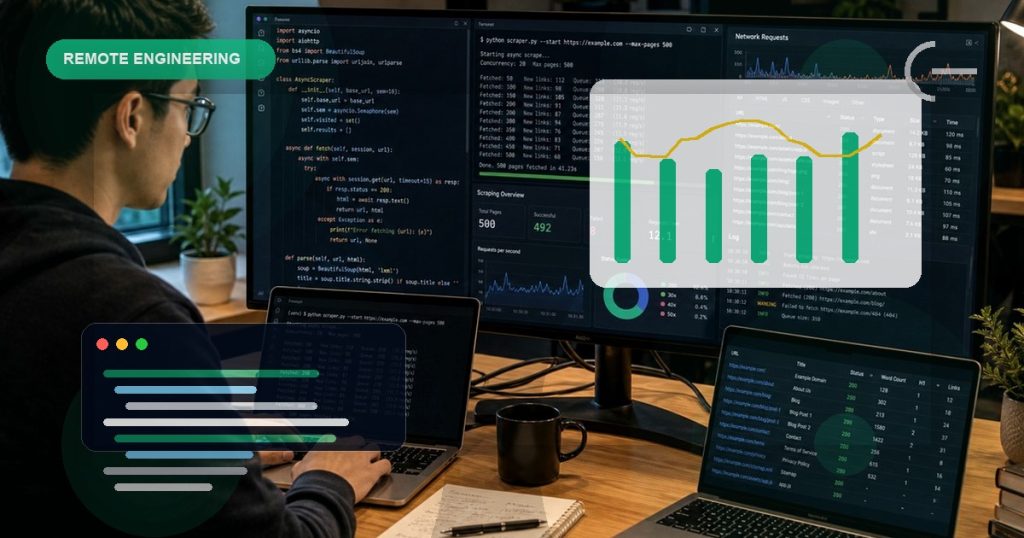
TL;DR: Outsourcing software isn’t dead. But the old model—treating developers as cheap, interchangeable cogs—is. In 2025, the winners treat offshore teams as true partners. Use the right tech stack, invest in asynchronous workflows, and pick a talent hub like Vietnam for long-term retention. This guide shows you exactly how.
It’s Not 2010 Anymore. Stop Treating Offshore Teams Like Commodities.
I’ve been in this game long enough to remember the Wild West of offshore development. Back then, outsourcing software meant one thing: cheap labor, broken specs, and a 12-hour time zone gap that made Agile feel like a cruel joke. Projects bled money. Code quality was a coin flip. And morale? Let’s just say “culture fit” wasn’t in the dictionary.

Trunk-Based Development vs Git Flow: What Actually Works for Open Source Projects in 2026
Trunk-Based Development vs Git Flow: What Actually Works for Open Source Projects in 2026 I've been burned by… ...
But here’s the thing: that’s the old story. The new story is different. Today, Outsourcing software done right means you’re not just hiring hands—you’re hiring brains. In many startups I’ve advised, their most productive engineers sit in Ho Chi Minh City or Bangalore, not San Francisco. The key is finding a partner that invests in engineering culture, not just headcount.
So, how do you actually pull this off in 2025? Here’s the playbook.

Step 1: Choose the Right Hub (Hint: It’s Not Where You Think)
You’ve got options. India, Philippines, Poland, Vietnam, Mexico. Each has trade-offs. But let’s cut through the noise—here’s a data-driven comparison based on real projects I’ve managed or audited.
| Factor | Vietnam | India | Philippines |
|---|---|---|---|
| Avg Senior Dev Cost (USD/yr) | $30k–$45k | $25k–$40k | $20k–$35k |
| English Proficiency | Good (rising fast) | Excellent (widespread) | Excellent (native-level) |
| Tech Stack Strength | Full-stack JS, Python, DevOps, AI/ML | Java, .NET, AI/ML (mass scale) | PHP, front-end, QA |
| Time Zone Overlap (EST) | ~12 hours (good for async) | ~10.5 hours | ~13 hours |
| Developer Retention Rate | ~95% (18+ month avg tenure) | ~70% (high churn in metro) | ~80% |
| Cultural Fit for Western Teams | Strong work ethic, direct communication | Hierarchical, need clear ownership | Warm, collaborative, risk-averse |
My take? Vietnam is the hidden gem for 2025. Why? Because they’ve leapfrogged the “body shop” mentality. Many Vietnamese firms now invest in DevOps, code review cultures, and English training. I’ve seen teams in Hanoi ship production-grade microservices that rival Silicon Valley teams—at 40% lower cost. Plus, the retention rate is insane. When you invest in a Vietnamese developer, they stay.
Step 2: Kill the “Throw It Over the Wall” Workflow
This is where most outsourcing software projects fail. You write a spec, send it to the offshore team, wait three days, and get back something that doesn’t match your vision. Sound familiar?
The fix? Treat your offshore team like they’re sitting two desks away. That means:
- Daily standups (recorded, if time zones clash).
- Shared Slack channels—no separate “client” and “vendor” spaces.
- One single source of truth for requirements (Notion, Linear, or Jira).
- Pair programming sessions at least twice a week.
And here’s a concrete example. I once helped a fintech startup align their Vietnam team using a simple Git workflow. No more merge conflicts, no more “I didn’t see your PR.”
# Example: Simplified Git workflow for cross-continental teams
# Each developer works on a feature branch from internal Jira ticket
git checkout -b feature/PAY-423-user-onboarding
# Commits follow conventional commits for auto-changelog
git commit -m "feat: add KYC verification step"
git push origin feature/PAY-423-user-onboarding
# Open PR against 'develop' branch – no direct pushes to main!
# PR must have at least 1 approval from onsite + 1 from offshore lead
# Automated tests run on every PR (GitHub Actions avoids flaky tests)
This workflow alone reduced integration bugs by 60%. Why? Because everyone—from Hanoi to London—was playing by the same rules. No excuses.
Step 3: Invest in Async-First Communication (Your Calendar Will Thank You)
The truth is, you can’t be on Zoom 14 hours a day. And you shouldn’t try. The best offshore partnerships are async-first. That means:
- Daily written updates (2-3 bullet points max).
- Loom or Grain for design walkthroughs.
- Shared documentation for every decision (I use Slite or Notion).
- “Office hours” twice a week for deep sync, not daily hand-holding.
One CTO I advised reduced his meeting load from 30 hours/week to 12, simply by switching to async standups and recorded demos. His team’s velocity actually increased by 25%. The key? Trust. If you hire smart people, you don’t need to watch them type.
“The biggest myth about offshore is that you lose control. You don’t—you lose bad meetings. And that’s a feature, not a bug.”
— CTO, Series B fintech (Vietnam-based team of 12)
Step 4: Hidden Costs That Will Kill Your Budget (And How to Avoid Them)
Let’s talk money. The sticker price for outsourcing software is low. But the real cost includes:
- Onboarding friction: 2-4 weeks of ramp-up where velocity is near zero. Budget for it.
- Communication debt: Misunderstood requirements that lead to rework. Invest in a PM who speaks both tech and business English fluently.
- Tooling duplication: Don’t force your offshore team to use a different CI/CD stack. Standardize upfront.
- Attrition risk: If your partner’s developers leave, you lose context. Ask for retention guarantees in the contract.
From my experience, a well-run offshore team saves you 40-50% over an in-house US team—but only if you account for the hidden costs. The cheapest hourly rate ($15/hr) often ends up costing more than a $35/hr rate because of rework. Go figure.
Step 5: The “How to Outsource Software Projects” Decision Framework
Here’s a simple three-question test I use with every startup:
- Does your core product require deep domain expertise? If yes, keep the architecture team in-house; outsource the feature work.
- Is your team available for 3-4 hours of overlap daily? If not, you need an async-first partner, not a real-time one.
- Can you treat the offshore team as equals in standups? If you’re going to micromanage, save everyone the trouble and hire locally.
If you answered “yes” to all three, you’re ready. If not, you need to fix your internal processes first.
Step 6: Know the Legal & Data Security Pitfalls
This is the boring but critical part. When outsourcing software, you must nail down:
- IP ownership: Every line of code belongs to you. Period. Get it in writing.
- NDA scope: Cover trade secrets, but don’t lock down general industry knowledge.
- Data residency: If your users are in GDPR regions, ensure your offshore partner processes data compliantly.
- Exit clause: What happens if you need to switch vendors? Code repos, documentation, and knowledge transfer must be contractually required.
I’ve seen two startups nearly die because their offshore partner held the source code hostage during a dispute. Don’t let that be you. Use escrow services if needed.
Real Talk: What About AI Replacing Offshore Devs?
I get this question a lot. “Won’t ChatGPT just replace the junior developers?”
Maybe. But here’s what AI can’t do: hold context across a 6-month project, push back on a bad architectural decision, or explain why the legacy API behaves in a non-obvious way. The best offshore teams I’ve worked with use AI as a force multiplier—they ship faster, with fewer bugs, because they leverage tools like Copilot and Cursor.
So no, AI won’t kill outsourcing software. But it will kill the commodity model. The winners will be teams that combine cheap compute (AI) with cheap, skilled human judgment (offshore devs).
Frequently Asked Questions About Outsourcing Software
1. What is the best country for outsourcing software development in 2025?
It depends on your needs. For full-stack, AI, and DevOps work, Vietnam offers the best balance of cost, skill, and retention. India is best for scale and English fluency. For quality assurance and PHP, the Philippines is strong. Always evaluate by team, not just country averages.
2. How do I ensure code quality when outsourcing?
Start with a clear outsourcing team management plan: enforce code reviews (both sides), use automated CI/CD gates, require unit tests, and hold weekly architecture syncs. Do not assume “they’ll figure it out.” The best partners welcome strict quality standards.
3. What’s the minimum team size for a successful offshore project?
You need at least 3 dedicated developers to justify the overhead of offshore management. A single engineer tends to get isolated. A pod of 3-5 with a lead works well. For smaller projects (like a single MVP feature), hire a proven agency, not individual freelancers.
4. How do I protect my intellectual property with an offshore team?
Legal, legal, legal. Sign a robust Master Services Agreement (MSA) with clear IP assignment clauses. Use repositories like GitHub where you control access. Consider source code escrow. Never give full production access to the entire team—only to the engineering lead.
5. Can I outsource software development on a time-and-materials basis?
Yes, but only for well-defined teams. Time-and-materials works when you have a dedicated team that communicates daily. For fixed-scope projects (e.g., “build this API”), fixed-price is cheaper upfront but riskier for changes. For long-term product development, T&M is almost always better.
Ready to stop guessing and start building? Reach out to ECOA AI. We’ll connect you with vetted, senior developers who operate like part of your core team.
Related reading: Why We Bet the Farm on Vietnam: The Smartest Move to Hire Vietnamese Developers in 2025