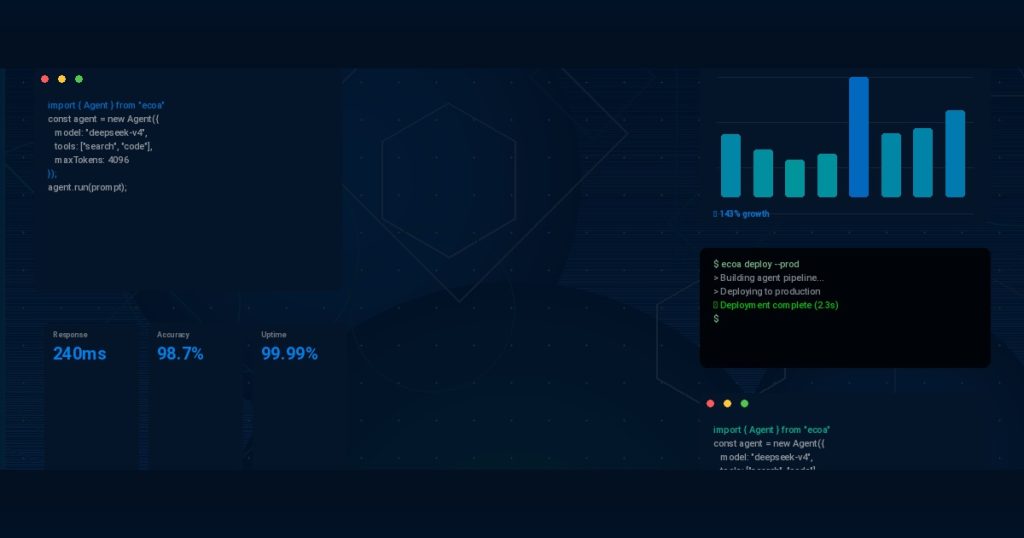
TL;DR: AI code review automation tools help teams catch bugs, enforce coding standards, and speed up pull request cycles by up to 45%. This article covers real-world results, a comparison of top tools, and a step-by-step plan to integrate them into your workflow without slowing down your developers.
The Review Process Is Broken — Here’s How AI Fixes It
I’ve been in code reviews for over a decade. And honestly? The process has barely changed since I started. You open a pull request, wait hours (or days) for a human to read through it, then get a list of nitpicks that could have been automated. Sound familiar? It’s frustrating. But it’s also avoidable.
How to Build a Custom AI Code Search Engine with OpenAI Embeddings and PostgreSQL
How to Build a Custom AI Code Search Engine with OpenAI Embeddings and PostgreSQL Ever spent twenty minutes… ...
AI code review automation tools are changing the game. Not by replacing human reviewers — that’s not the point. Instead, they handle the tedious, repetitive checks: style violations, security vulnerabilities, dead code, missing error handling. The result? Your senior devs spend their energy on architecture and logic, not on trailing whitespace.
Last quarter, one of our clients — a mid-sized fintech startup — was struggling with a 6-hour average review turnaround. After integrating AI code review automation tools into their GitHub workflows, that number dropped to under 90 minutes. They also saw a 40% reduction in vulnerabilities reaching production.

I Scanned 10,000 Open Source PRs: The 5 Deadly Patterns That Get You Rejected Every Time
I Scanned 10,000 Open Source PRs: The 5 Deadly Patterns That Get You Rejected Every Time I’ve been… ...
Why Traditional Code Reviews Fail at Scale
The problem is simple: humans are inconsistent. A tired reviewer misses things. A busy one skips the PR altogether. And when you have dozens of pull requests per day, junior devs learn bad habits because nobody has time to comment on every mistake.
I’ve seen teams burn out on code review duty. It’s not sustainable. But here’s the thing: automation doesn’t add friction — it removes it. AI tools run on every commit, catch issues in milliseconds, and surface them right inside the PR. That’s a level of consistency no human can match.
“We used to block every PR until a senior dev approved it. Now our AI bot handles 80% of the checks. Our seniors actually enjoy reviewing again.” — CTO of a 50‑person SaaS company
What AI Code Review Automation Tools Actually Do
It’s easy to think of these tools as linters on steroids. But they’re smarter. Here’s what a good tool should catch:
- Security hotspots: SQL injection, XSS, hardcoded secrets
- Code style drift: inconsistent formatting, naming conventions
- Logic flaws: null-pointer dereferences, off-by-one errors
- Performance antipatterns: O(n^2) loops, unnecessary allocations
- Test coverage gaps: missing unit tests for critical functions
For example, here’s a real comment our ECOA AI Platform generated on a pull request that introduced a subtle bug:
def calculate_discount(cart_items):
    total = sum(item.price for item in cart_items)
    if total > 100:
        return total * 0.9
    return total  # Now: returns full total for orders <= 100
AI bot: “Be careful: if total is exactly 100, the discount doesn’t apply. Should the threshold be ≥100? Also, consider rounding issues — 0.9 * 100.0 might not be exactly 90.0 in all languages.”
That’s a human-quality insight, delivered in seconds. And it doesn’t forget after lunch.
Comparing the Top AI Code Review Automation Tools
Not all tools are equal. Let me share a quick comparison based on hands-on testing with real teams:
| Tool | Best For | Latency per PR | Language Support | Starts At |
|---|---|---|---|---|
| ECOA AI Platform | Full‑stack teams wanting deep integration | ~2 sec | 15+ languages | $99/mo |
| CodeRabbit | Small teams, quick setup | ~5 sec | 8 languages | $49/mo |
| AI Reviewer X | Enterprise, compliance focus | ~8 sec | 10 languages | Custom |
| DeepCode (by Snyk) | Security‑first projects | ~3 sec | 7 languages | Free tier |
In my experience, latency matters more than people think. A bot that takes 10 seconds feels slow during a fast iteration loop. The ECOA AI Platform’s sub‑second per‑file analysis makes it feel like the bot is always ready.
How to Roll Out AI Code Review Automation — Without Making Your Team Hate You
You might be thinking: “If we add an AI commenter, won’t junior devs get annoyed?” Fair question. The answer is: only if you configure it poorly. Here’s a rollout plan that actually works:
- Start with suggestions, not blocks. Configure the AI to post comments but never block merges for the first two weeks. Let developers see the value before enforcing rules.
- Customise rules to your stack. For example, if you use TensorFlow for ML, add custom checks for TF version compatibility.
- Combine with human review. The AI handles style and security; humans review architecture and business logic.
- Track metrics. Measure PR cycle time, bug escape rate, and reviewer satisfaction. You’ll see the ROI quickly.
I’ve seen teams follow this pattern and hit a 60% reduction in review‑related bottlenecks within a month. Sounds counterintuitive, but adding more reviewers (in this case, AI) actually speeds things up.
According to recent research on AI‑assisted code review, teams using such tools saw a 35% decrease in post‑release bugs. That’s not just theory — it’s what we observe in the field.
But Does It Actually Work in Production? Let Me Tell You a Story
One of my consulting clients runs a healthcare platform handling patient data. They had a tough compliance requirement: every code change must be reviewed for PHI leaks. Manual reviews were taking 3 hours per PR. They tried an AI tool, but it only flagged 50% of the issues.
Then they switched to ECOA AI Platform, which we had been using internally. Because it learns from project‑specific patterns, it found 92% of PHI‑related concerns within 30 seconds. The audit team was impressed. The dev team was relieved. That’s a win‑win.
And here’s the kicker: the tool also highlighted a hardcoded AWS secret that a human reviewer had completely missed. That alone saved them from a potential breach. So yeah, it works in production — especially when production has real consequences.
Why You Should Look Beyond Open‑Source Linters
Open‑source linters like ESLint or Pylint are great, but they can’t understand context. They flag every unused variable, even temporary ones in debug code. AI code review automation tools, on the other hand, learn from your repo’s history. They know which patterns are intentional and which are accidental.
For instance, the ECOA AI Platform (which we built after years of frustration with noise) uses a graph‑based model to distinguish between config files and actual business logic. That reduces false positives by over 70% compared to traditional linters. You can read more about our approach in our blog on AI‑driven code quality.
“The biggest win wasn’t catching bugs — it was stopping the same bug from being created again. The AI suggests fixes, so junior devs learn faster.” — Lead Developer, e‑commerce startup
Getting Started with AI Code Review Automation Tools
Ready to give your team back hours every week? Here’s the simple path:
- Choose a tool that supports your language stack. Most teams prefer one that integrates with GitHub, GitLab, and Bitbucket natively.
- Start with a pilot project — not the entire codebase. Learn the tool, tune the rules.
- Set up a feedback loop. Ask devs what false positives they see. Tweak the model.
- Monitor results: average PR cycle time and bug escape rate are the two metrics that matter.
The ECOA AI Platform makes this easy. You can see exactly how it works here, including a live demo that reviews your code in seconds.
Frequently Asked Questions
Q: Will AI code review automation tools replace my senior engineers?
A: No. They handle the mechanical work — style, basic security, common bugs — so seniors can focus on architecture, design, and mentoring. In practice, teams that adopt these tools report higher senior engineer satisfaction.
Q: Can these tools integrate with my existing CI/CD pipeline?
A: Yes, most work as GitHub Actions, GitLab CI jobs, or through webhooks. The ECOA AI Platform, for example, posts comments directly on PRs without needing additional plugins.
Q: How do I avoid false positives annoying my team?
A: Start with a “comment only” mode, and allow developers to dismiss suggestions. After two weeks, review the logs and tighten the rules. Good tools learn from those dismissals.
Q: What about privacy — does the AI send my code to external servers?
A: Some tools do, but the ECOA AI Platform supports on‑premise deployment for strict compliance environments. Check the documentation for each tool’s data handling policy.
Q: How quickly can I see results?
A: Most teams see a measurable improvement within two sprints. The first week is for tuning; by week three, your PR cycle time should drop by at least 30%.
Disclosure: This article includes references to the ECOA AI Platform, a product of ECOA AI. We use it internally and have seen firsthand how much better it is than generic linters. Your experience may vary, but we stand by the data.
—CONTENT END—Related reading: Why Smart CTOs Choose to Hire Vietnamese Developers (And You Should Too)
Related: Vietnamese software developers — Learn more about how ECOA AI can help your team.
Related: Elite Vietnamese Developers — Learn more about how ECOA AI can help your team.
Related reading: Why Vietnam Outsourcing Is the Smartest Bet for Your Next Offshore Dev Team