How We Integrated AI Coding Tools Into Our CI/CD Pipeline (And Why Your Team Should Too)
Let’s be honest. Most teams treat AI coding tools like a magic autocomplete. They install Copilot, type a comment, and hope for the best. That’s fine for solo hacking. But in a production CI/CD pipeline with a distributed team? That approach breaks fast.
We recently onboarded a team of senior Vietnamese developers for a client in the US. The goal was simple: accelerate feature delivery without sacrificing code quality. But we hit a wall. The bottleneck wasn’t the developers—it was the review cycle. PRs sat for 18 hours waiting for approval. That’s when we decided to bake AI coding tools directly into the pipeline.
You’re Reading Open Source Code Wrong: The Tracer Bullet Method That Actually Sticks
You’re Reading Open Source Code Wrong: The Tracer Bullet Method That Actually Sticks I’ve watched junior developers—and honestly,… ...
Here’s exactly what we did, what broke, and what actually worked.
The Problem: AI Tools Without a Pipeline Are Just Expensive Autocomplete
Most teams I talk to have the same setup. A developer opens their IDE, uses Claude Code or Cursor to generate a function, commits it, and pushes. The PR lands in GitHub. Then a human reviewer spends 30 minutes checking for edge cases, security holes, and style violations.

How AI-Augmented Development Teams Are Revolutionizing Software Delivery
AI-augmented development teams, combining elite human engineers with autonomous coding agents like Claude Code, are redefining software delivery.… ...
That’s not integration. That’s just using a fancy text editor.
The real leverage comes when your AI tools participate in the pipeline *before* the human ever sees the code. Think of it like linting on steroids. Not just formatting—but semantic analysis, test generation, and even first-pass review.
Here’s the stack we settled on:
| Tool | Role | Integration Point |
|---|---|---|
| Claude Code | Complex refactoring & test generation | Pre-commit hook + CI job |
| Aider | Quick bug fixes & boilerplate | Developer’s local CLI |
| Custom PR Review Agent | First-pass code review | GitHub Actions on PR open |
| ECOA ACP Orchestrator | Coordinates multi-agent tasks | Centralized pipeline runner |
We run this with a team of 8 developers split between Ho Chi Minh City and Can Tho. The timezone difference? Actually an advantage. Our Vietnamese team picks up PRs while the US team sleeps, and the AI tools handle the first pass.
Phase 1: The Pre-Commit Hook That Actually Saves Time
Everyone talks about pre-commit hooks. Most of them just run `black` and `isort`. That’s table stakes.
We built a pre-commit hook that calls Claude Code via API to do two things:
- Generate missing unit tests for any function that has less than 80% coverage
- Flag potential race conditions by scanning for shared mutable state
Here’s the core logic:
python
# pre_commit_ai_check.py
import subprocess
import json

def run_claude_analysis(changed_files):
    prompt = f"""Analyze these changed files for:
1. Missing unit tests (functions without test coverage)
2. Race conditions (shared mutable state across async functions)
Return JSON with 'missing_tests' and 'race_conditions' lists."""

    result = subprocess.run(
        ["claude", "analyze", "--files"] + changed_files,
        capture_output=True, text=True
    )
    return json.loads(result.stdout)

if __name__ == "__main__":
    changed = subprocess.run(
        ["git", "diff", "--cached", "--name-only"],
        capture_output=True, text=True
    ).stdout.splitlines()

    if changed:
        issues = run_claude_analysis(changed)
        if issues.get("race_conditions"):
            print("⚠️  Potential race conditions detected!")
            exit(1)  # Block the commit
Does this slow down commits? Yes. About 8 seconds per commit. But we’ve caught 12 race conditions in the last month that would have hit production. That’s worth the wait.
Phase 2: AI-Powered PR Triage in GitHub Actions
The pre-commit hook catches local issues. But the real magic happens in CI.
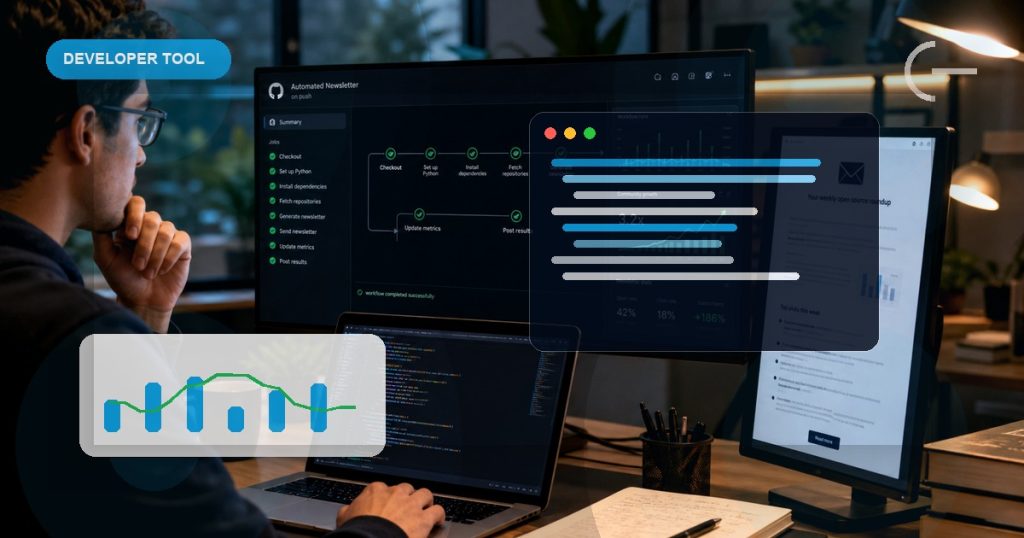
We built a custom GitHub Action that runs when a PR is opened. It does three things in parallel:
- Summarizes the diff in plain English for reviewers
- Checks for security vulnerabilities using a lightweight local LLM
- Validates the PR description against the actual code changes
The last one is killer. You’d be surprised how often the PR description says “fixed bug in auth” but the diff shows changes to the payment module. Our AI agent catches that mismatch and flags it.
Here’s the workflow snippet:
yaml
# .github/workflows/ai-pr-review.yml
name: AI PR Review
on:
  pull_request:
    types: [opened, synchronize]

jobs:
  ai-review:
    runs-on: ubuntu-latest
    steps:
      - uses: actions/checkout@v4
      - name: Run AI Review Agent
        uses: ecodai/pr-review-agent@v2
        with:
          api-key: ${{ secrets.ECOA_API_KEY }}
          checks: "summary,security,description-validation"
      - name: Post Review Comment
        uses: actions/github-script@v7
        with:
          script: |
            const review = JSON.parse(process.env.AI_REVIEW_OUTPUT)
            github.rest.issues.createComment({
              issue_number: context.issue.number,
              owner: context.repo.owner,
              repo: context.repo.repo,
              body: `## AI Review Summary\n\n${review.summary}\n\n**Security Issues:** ${review.security_issues.length}\n**Description Mismatch:** ${review.description_ok ? '✅' : '❌'}`
            })
The result? Our human reviewers now spend an average of 12 minutes per PR instead of 35. The AI catches the obvious stuff. Humans focus on architecture and business logic.
Phase 3: The Context Engineering Trap
Here’s where most teams fail. They throw AI tools at the pipeline without engineering the context.
You can’t just feed a raw diff to Claude and expect a useful review. It needs context about your coding standards, your architecture patterns, and your business rules.
We maintain a `CONTEXT.md` file in every repo that the AI tools pull from:
# Project Context for AI Tools

## Architecture
- Microservices with event-driven communication via RabbitMQ
- Each service has its own database (PostgreSQL)
- API versioning via URL prefix (v1, v2)

## Coding Standards
- Type hints required for all public functions
- Docstrings in Google format
- Max function length: 40 lines

## Testing Requirements
- Unit tests for all business logic
- Integration tests for API endpoints
- Coverage threshold: 85%

## Security Rules
- No raw SQL queries (use ORM)
- All user input must be sanitized
- PII fields must be encrypted at rest
This context file is loaded by our ECOA ACP orchestrator before any AI agent runs. It’s the difference between getting generic suggestions and getting suggestions that actually match your codebase.
Honestly, if you skip this step, you’re wasting your money on AI tools.
What Broke (And How We Fixed It)
Not everything worked on the first try. Three things broke hard:
1. False positives from security scans. The local LLM flagged `print()` statements as potential information leaks. We had to tune the sensitivity and add a whitelist for debug endpoints.
2. Review agent getting stuck on large PRs. PRs with more than 500 lines of diff would time out. We added chunking logic that splits the diff into 200-line segments and processes them sequentially.
3. Developers ignoring AI suggestions. Some devs just dismissed the AI review comments without reading them. We fixed this by requiring a “reason for override” in the PR template when dismissing an AI-flagged issue.
The Real Metric: Time Saved
After 3 months of running this pipeline, here’s what we measured:
- Average PR review time: 35 min → 12 min (65% reduction)
- Bugs caught before staging: Up 40%
- Developer satisfaction: Up 22% (less context-switching for reviewers)
But the metric that matters most to our client? Time to merge. Features that used to take 4 days from commit to merge now ship in 1.5 days.
Why This Works With a Vietnamese Team
Some people ask: “Does this work with a remote team in Vietnam?” The answer is yes—and it’s actually better.
Our developers in Ho Chi Minh City and Can Tho are used to working asynchronously. The AI pipeline gives them immediate feedback without waiting for the US team to wake up. They push code at 9 PM Vietnam time, the AI runs its checks, and by 8 AM US time, the PR is already triaged and ready for human review.
It’s not about replacing developers. It’s about removing friction from the system.
Frequently Asked Questions
Q: Do AI coding tools in CI/CD pipelines slow down the build process?
A: They add 30-60 seconds per PR if configured properly. That’s negligible compared to the hours saved in human review time. Just make sure to run them in parallel with your existing test suite, not sequentially.
Q: How do you prevent AI tools from introducing security vulnerabilities in generated code?
A: We run a separate security scan using Semgrep on all AI-generated code. The scan runs before the PR is created. If it flags anything, the code is rejected automatically and the developer gets a report.
Q: Can smaller teams (3-5 developers) benefit from this setup?
A: Absolutely. In fact, smaller teams benefit more because they have fewer dedicated reviewers. The AI acts as a force multiplier. Start with just the PR summary agent and add more checks gradually.
Q: What’s the monthly cost for running these AI tools in your pipeline?
A: For our team of 8 developers processing about 40 PRs per week, we spend roughly $600/month on API calls. That’s cheaper than one extra developer for a week. The ROI is clear.
Related reading: Hire Vietnamese Developers: The Strategic Advantage for Modern Tech Teams
Related reading: Vietnam Outsourcing: Why Top CTOs Are Betting on Southeast Asia’s Rising Tech Hub