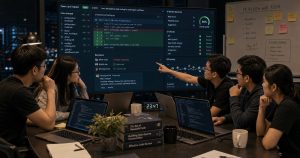
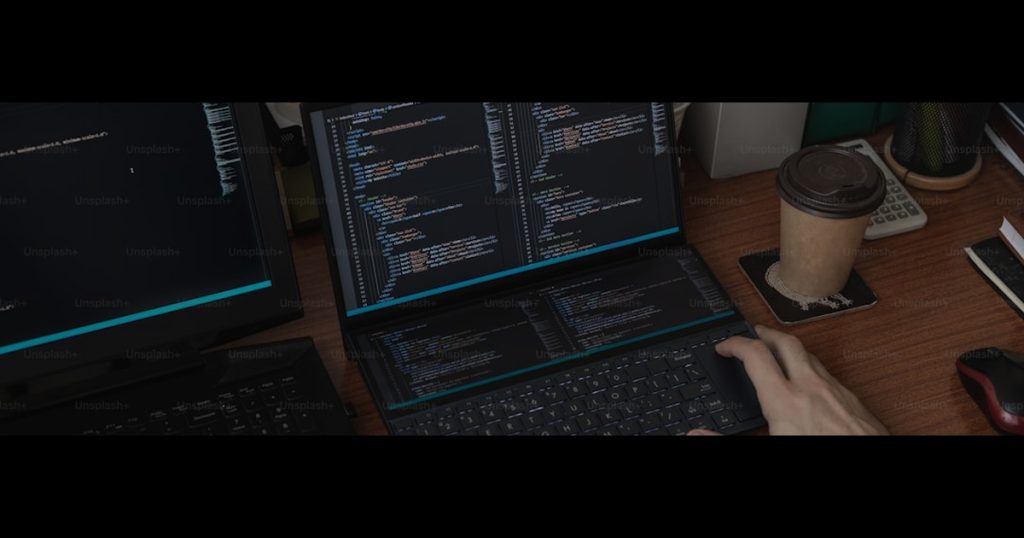
AI-augmented software development is a delivery model where AI agents handle repetitive engineering tasks — writing boilerplate code, running tests, flagging bugs — while senior human engineers review, architect, and own final code quality. Unlike fully automated “AI coding” tools, it keeps experienced developers in the loop for judgment calls. The result is faster delivery without sacrificing the oversight traditional outsourcing relies on.
If you’re a CTO or engineering lead evaluating how to scale your team in 2026, this model sits at the intersection of two trends you’ve probably already noticed: AI coding assistants getting good enough to trust with real work, and the ongoing need for human senior review on anything that touches production.
Why Your Multi-Agent System Needs a Shared Memory Layer: Practical Lessons from Production
Why Your Multi-Agent System Needs a Shared Memory Layer: Practical Lessons from Production We rolled out a 12-agent… ...
What Is AI-Augmented Software Development? (Definition)
AI-augmented software development combines AI agents with human engineering oversight in a structured workflow. AI agents — not just autocomplete tools, but orchestrated systems that can write code, run tests, and flag issues continuously — take on the repetitive, time-consuming parts of the job. Senior engineers then review, architect, and sign off on what ships. It’s not “AI writes your app.” It’s “AI does the grunt work, humans make the calls that matter.”
This distinguishes it from two things people often confuse it with:

The Real Cost of Outsourcing Software: Why Offshore Engineering Beats Local Talent (and When It Doesn’t)
TL;DR: Outsourcing software isn’t about saving peanuts—it’s about accessing top-tier engineering talent. Vietnam’s offshore market offers 40% lower… ...
- AI coding tools (like autocomplete or chat-based code suggestions) — these assist an individual developer inside their workflow, but there’s no structured orchestration or independent review layer.
- Fully automated code generation — where AI outputs code with no human review step. This is rarely production-ready for real business logic, security-sensitive code, or anything requiring architectural judgment.
AI-augmented development sits between these: structured, continuous AI work, paired with experienced engineers who remain accountable for what gets delivered.
How AI-Augmented Development Works
AI Agents Handle Repetitive Engineering Tasks
In a well-run AI-augmented workflow, AI agents are assigned the tasks that consume the most developer hours but require the least architectural judgment: writing boilerplate code, generating unit tests, refactoring for style consistency, scanning for common bugs, and drafting documentation. Because these agents can run continuously rather than clocking in for an 8-hour shift, work keeps moving between human review cycles instead of sitting idle overnight.
Senior Engineers Review, Architect, and Ensure Quality
AI output isn’t shipped as-is. Senior engineers review every meaningful change — checking logic, security implications, and whether the code actually solves the problem as scoped. They own the architecture decisions AI agents aren’t equipped to make: how services communicate, where data lives, what the long-term maintainability tradeoffs look like. This review layer is what keeps “AI-augmented” from becoming “AI-unsupervised.”
QA, DevOps, and PM Layers Keep Delivery On Track
Beyond code review, a functioning AI-augmented team still needs the same supporting roles any serious engineering team needs: QA to validate against real-world use cases, DevOps to manage deployment pipelines and infrastructure, and a PM to keep scope, timelines, and stakeholder communication on track. AI agents don’t replace these functions — they take work off the plates of the people doing them, which is where the speed gains actually come from.
AI-Augmented Development vs In-House vs Traditional Offshore
| Criteria | In-House Hiring | Traditional Offshore Outsourcing | AI-Augmented Development |
|---|---|---|---|
| Hiring speed | Weeks to months | Weeks | Days — ECOA AI commits to a 48-hour developer replacement if a match isn’t right |
| Cost structure | Highest (salary + benefits + office overhead) | Lower than in-house | Lower, with AI reducing hours spent on repetitive tasks |
| Code review process | Internal, varies by team maturity | Depends on the vendor | AI agent first pass + senior engineer review on every change |
| Availability | Business hours, local timezone | Business hours, offshore timezone | AI agents run continuously; humans review on a set schedule |
| Scalability | Slow — bound by the recruiting cycle | Moderate — bound by vendor bench depth | Faster — add engineers and AI agent capacity together |
The honest takeaway: none of these models is universally “best.” In-house gives you the most control if budget allows it. Traditional offshore outsourcing can lower costs without requiring you to build any new internal process. AI-augmented development is the newer option worth evaluating if what you need is outsourcing-level cost efficiency combined with continuous AI-assisted throughput and senior-level review on everything that ships.
Who Should Consider AI-Augmented Development
This model tends to fit teams that already know what “good” code review looks like and want more engineering throughput without proportionally more headcount or coordination overhead. In practice, that’s usually:
- Startups and scale-ups that need to ship features faster than their current in-house team can absorb, but aren’t ready to run a full internal hiring process.
- Product teams with a backlog full of well-scoped, repetitive work — API integrations, internal tooling, test coverage, refactors — that’s eating senior engineers’ time without using their judgment.
- Engineering leads who’ve already tried AI coding assistants individually and want the same leverage applied consistently across a team, with review built in rather than left to chance.
It’s a weaker fit for teams with no existing code review discipline, or for work that is almost entirely novel architecture and research — there, the ratio of senior judgment to repetitive execution is too high for AI agents to meaningfully absorb load.
How to Evaluate an AI-Augmented Development Partner
If you’re comparing providers, the questions that actually separate a credible AI-augmented model from a relabeled outsourcing shop are specific:
- What exactly do the AI agents do, and what do senior engineers review before anything merges?
- Who is accountable for a bug that ships — the agent, the engineer, or neither?
- Can you see the AI agents’ output and the human review history, or is it a black box?
- What’s the actual process for QA, DevOps, and project management — are these separate functions or assumed to be automated away?
ECOA AI runs dedicated developer teams on this model: AI agents handle the repetitive engineering work continuously, and senior engineers, QA, and DevOps review and ship the result. You can read more about the approach on the about page, see how dedicated teams are structured on the dedicated developers page, or check current plans on the pricing page.
In practice, teams adopt this model incrementally, starting with a narrow slice of the codebase before expanding AI agent scope as trust in the review process builds. Treat the first few sprints as a calibration period, tracking how often senior engineers rework AI output — that rate reveals more about partner quality than any marketing claim.
A few warning signs tend to separate an AI-augmented offering that’s real from one that’s just an outsourcing shop with a new label:
- No visibility into AI agent activity. If a partner can’t show you what the AI agents actually did on a task — what they changed, what tests they ran, what got flagged — you’re being asked to trust a black box. A credible provider should be able to walk you through an agent’s work on a real ticket.
- No committed process for replacing a mismatched developer. Team fit issues happen even with careful screening. Ask what the provider’s actual process is — not just a verbal promise — if an assigned developer isn’t working out, and how fast it happens.
- Senior review that’s assumed rather than demonstrated. Anyone can say “senior engineers review everything.” Ask who those engineers are, what their review actually checks (security, architecture, test coverage), and whether you can see evidence of that review on code that ships to you.
- Pricing or scope that changes significantly after you sign. AI-augmented development should be transparent about what’s included — AI agent work, senior review, QA, DevOps, PM — before you commit, not renegotiated once you’re locked into a vendor relationship.
None of these red flags are unique to AI-augmented development — they’re the same questions worth asking of any outsourcing partner. What’s different here is that the AI layer adds a new place for opacity to hide, so it’s worth asking about explicitly rather than assuming it’s covered by the same due diligence you’d apply to a traditional vendor.
FAQ: AI-Augmented Software Development
Is AI-augmented development the same as “vibe coding” or fully automated AI coding?
No. Fully automated AI coding ships code with no independent human review step. AI-augmented development uses AI agents for repetitive work but keeps senior engineers responsible for reviewing, architecting, and approving everything before it ships.
Do I still need senior engineers if I use AI-augmented development?
Yes — arguably more than ever. Senior engineers are the quality control layer that makes the model safe to use in production. Removing them turns AI-augmented development into unsupervised AI coding, which is a different (and riskier) thing.
What tasks should NOT be handed to AI agents in this model?
Architectural decisions, security-sensitive logic, and anything requiring business context the AI doesn’t have should stay with human engineers. AI agents are best suited to well-scoped, repetitive, or mechanical tasks.
How is this different from hiring an offshore development team?
Traditional offshore outsourcing is still fundamentally human hours billed for human work. AI-augmented development adds a layer of continuous AI-assisted work on top of a human team, with senior review built into the workflow rather than left to vary by vendor.
How do I get started with an AI-augmented development team?
Start by defining the backlog of repetitive, well-scoped work you’d want AI agents to absorb, then evaluate partners on their review process, not just their AI tooling. You can learn more about how ECOA AI structures this on the about page.