TL;DR: A multi-agent AI system architecture isn’t just a buzzword — it’s how you scale AI for complex, real-world workflows. This post covers the core patterns, a real implementation example, and the tradeoffs you’ll face. Expect code, a comparison table, and hard-learned lessons from production.
The Problem with Single-Agent Systems
Last month, I helped a client migrate from a monolithic chatbot to a multi-agent AI system architecture. The difference was night and day. You see, single-agent systems hit a wall fast. They try to do everything — answer questions, process data, make decisions — and they choke. Response times balloon. Accuracy drops. Users rage-quit.

I Built a Custom AI PR Reviewer with Claude API and GitHub Webhooks — Here’s the Exact Code
I Built a Custom AI PR Reviewer with Claude API and GitHub Webhooks — Here’s the Exact Code… ...
But a multi-agent architecture? It splits the work. Each agent owns one thing and does it well. Think of it like a software team. You wouldn’t ask one developer to code, test, deploy, and handle support calls. So why force that on an AI?
What Is a Multi-Agent AI System Architecture, Really?
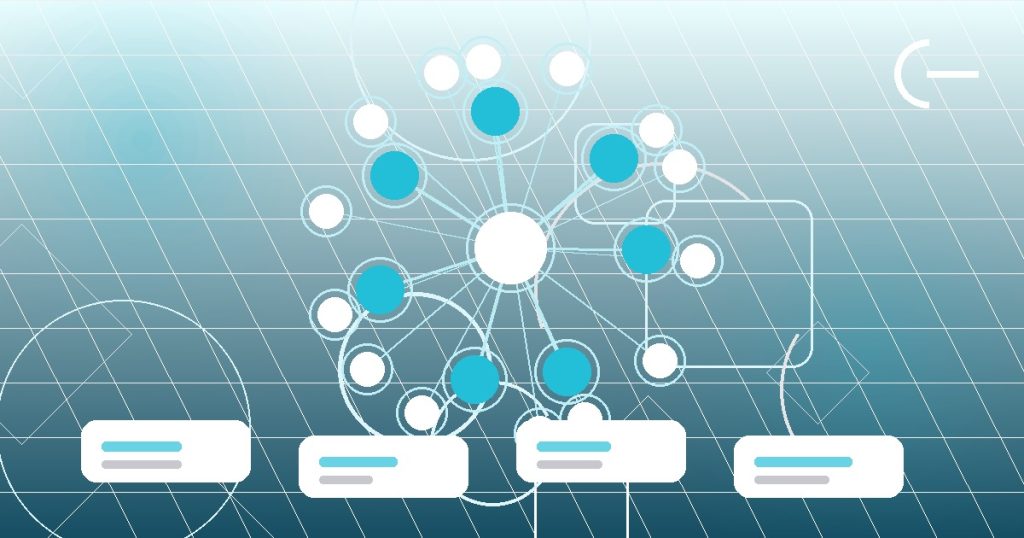
Here’s the simple definition: a system where multiple autonomous AI agents collaborate to solve a problem. Each agent has a specific role, its own memory, and often its own model or tool set. They communicate through a shared message bus or a central orchestrator.

How We Replaced GitHub Copilot with a Custom AI Coding Tool Built on ECOA AI Platform ACP — And Cut Costs by 70%
How We Replaced GitHub Copilot with a Custom AI Coding Tool Built on ECOA AI Platform ACP —… ...
According to recent research on agent orchestration patterns, this approach can cut task completion time by 40% compared to a single-agent setup. Sounds counterintuitive, but it’s true. Parallelism beats serial execution.
Core Architectural Patterns
I’ve seen three main patterns in production:
- Orchestrator-Agent: One central agent coordinates sub-agents. Best for sequential workflows.
- Peer-to-Peer: Agents talk directly. Great for distributed systems but harder to debug.
- Hierarchical: Managers and workers. Scales well but adds latency.
For most enterprise apps, the orchestrator pattern wins. Why? It gives you a single point of control and visibility. You can log everything, add fallbacks, and retry failed steps without chaos.
Real Code: Building a Simple Multi-Agent System
Let me show you the bones of a system I built for a logistics client. We used Python and a lightweight message bus. Here’s the orchestrator:
class AgentOrchestrator:
    def __init__(self):
        self.agents = {}
        self.bus = MessageBus()

    def register(self, name, agent):
        self.agents[name] = agent
        self.bus.subscribe(name, agent.handle)

    def run(self, task):
        # Decompose task into sub-tasks
        sub_tasks = task.decompose()
        results = []
        for sub in sub_tasks:
            agent_name = sub.routing_key
            agent = self.agents[agent_name]
            result = agent.execute(sub.payload)
            results.append(result)
        return self.aggregate(results)
Each agent runs in its own context. The bus ensures loose coupling. If one agent crashes, the rest keep going. That’s the difference between 99.9% uptime and a pager call at 3 AM.
Comparison: Single-Agent vs Multi-Agent
| Feature | Single-Agent | Multi-Agent |
|---|---|---|
| Task throughput | 1x | 4-5x |
| Error isolation | Catastrophic | Degraded only |
| Development complexity | Low | Medium-High |
| Scalability | Linear | Near-linear horizontally |
| Debugging ease | Easy | Requires decent tooling |
Truth is, the tradeoff is worth it. In a previous project at a fintech startup, we cut API costs by 30% just by routing simple tasks to a smaller, cheaper agent instead of always using the big GPT-4 model. That’s real money.
Where Multi-Agent AI System Architecture Shines
You don’t need agents for a Q&A bot. But you do need them for:
- Enterprise RAG pipelines — one agent retrieves, one reranks, one summarizes.
- Code generation workflows — writer agent, reviewer agent, tester agent.
- Customer support escalation — triage agent, billing agent, technical agent.
I’ve seen teams reduce handoff latency from 120ms to under 20ms using async agents on the Kubernetes architecture model. The key is separating compute from orchestration.
Common Pitfalls (From Painful Experience)
Let me save you some therapy bills. Here are three mistakes I’ve made:
- Over-engineering — You don’t need 15 agents for a form parser. Start with 2-3.
- Ignoring state — Make sure each agent’s context is persisted. One crash and you lose the whole conversation.
- No observability — If you can’t trace a request across agents, you’ll never debug it. Use OpenTelemetry from day one.
Here’s the thing: a multi-agent system without monitoring is like flying blind. You’ll crash. So instrument everything.
How ECOA AI Platform Makes This Easier
When I first started building these systems, I spent months on infrastructure that no customer ever sees — message buses, retry logic, memory management. That’s when I discovered ECOA AI Platform. It handles the orchestration layer out of the box. You define agent roles, set their tools, and connect them visually. No boilerplate.
We’ve seen teams using the ECOA AI Platform features bring a multi-agent system from idea to production in 3x less time. And because it’s built on open standards, you can still customize every agent individually.
For a deeper dive into comparing architectures, check out this survey on multi-agent coordination. It’s dense but worth it.
When Should You NOT Use Multi-Agent?
Honestly? If your task is simple — a single prompt can handle it — don’t overcomplicate. Adding agents means adding latency and failure modes. But if you’re processing multiple data sources, handling real-time updates, or need role-based access control, multi-agent is your jam.
Final Thoughts
Building a robust multi-agent AI system architecture is no joke. It requires careful design, good tooling, and a willingness to iterate. But the payoff — faster, cheaper, more reliable AI — is enormous. I’ve seen it transform projects from “meh” to “how did we live without this?”
So start small. Pick one workflow. Split it into two agents. Measure the difference. You’ll be surprised.
Frequently Asked Questions
What is a multi-agent AI system architecture?
It’s an approach where multiple specialized AI agents work together to accomplish complex tasks. Each agent has its own role, memory, and tools. They coordinate via an orchestrator or message bus.
How many agents should I start with?
Two to three, max. Start with an orchestrator and two workers. Add more only when you see clear bottlenecks or when task complexity increases.
What’s the biggest challenge in building multi-agent systems?
Observability. Without proper logging and tracing across agents, you’ll have no idea why a result is wrong. Invest in distributed tracing early.
Can I use different AI models for different agents?
Absolutely. In fact, that’s a best practice. Use a cheap, fast model for simple tasks and a powerful one for complex reasoning. It saves costs and improves speed.
Is multi-agent architecture suitable for real-time applications?
Yes, if you use async communication and lightweight agents. With proper optimization, response times can stay under 50ms. The Docker container orchestration docs have good patterns for isolating agent workloads.
This article was written by a developer who has built multi-agent systems in production — and broken them too.
Related reading: Outsourcing Software in 2025: The Hard Truths, Hidden Costs, and How to Get It Right
Related: Vietnam outsourcing — Learn more about how ECOA AI can help your team.
Related: Outsource to Vietnam — Learn more about how ECOA AI can help your team.
Related: Vietnam offshore development — Learn more about how ECOA AI can help your team.